
I will tell you what nobody tells you about a pattern book like Amigurumi Friends: the hard part is not the crocheting. It is the deciding. My name is Rosalind Brackett, and I have been crocheting since my grandmother sat me on her porch swing with a steel hook and a ball of Red Heart when I was nine years old. Sixty-three years later, I still make baby blankets, granny-square throws, dishcloths, hats for the hospital charity drive, and little creatures for my grandkids. So when I ordered the Amigurumi Friends book, I expected the usual thing: flip to a pattern, follow it, end up with a critter. What I got instead was a book that asked me to make a hundred small choices before I ever picked up my hook.
Amigurumi Friends is a 144-page book from Quarry Books, published June 18, 2024, and the title tells you exactly what it does: 20 easy patterns that you combine into more than 100 custom critters by changing shapes, colors, details, and yarns. That is a lovely promise. It is also, I learned, a promise that puts the work back on you. You are not buying 100 finished patterns. You are buying 20 building blocks and a system for putting them together. Some crocheters will find that freeing. I found it freeing too, once I got over my first grumpy evening, but I want to be honest about what this book is before you spend your money.
The Quick Verdict
A thoughtful pattern book that rewards planners and punishes crocheters who want to switch off their brains. I reach for it weekly, but I keep a notebook next to it and I do not follow it blindly.
Amazon Check Today's Price →Want to see the mix-and-match system up close?
The Amigurumi Friends book has lived on my side table for months, and it is the rare pattern book I actually keep returning to. Check today's price on Amazon and see whether the 20-pattern system fits how you like to crochet.
Amazon Check Today's Price on Amazon →How I've Used It
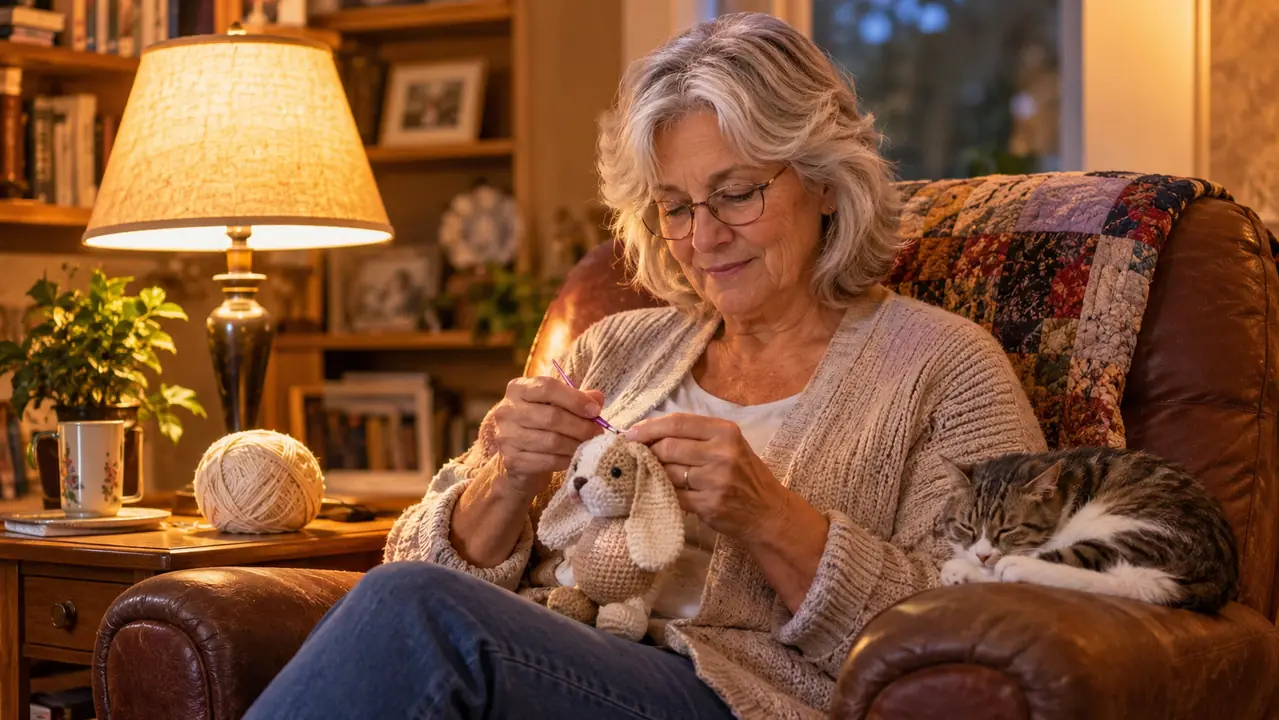
I have worked from this book about twice a week since it arrived. My usual setup is the recliner in the den, a floor lamp over my left shoulder, and Pickles the cat pretending not to watch the yarn. I started with the simplest base pattern I could find and made one critter exactly as written, no changes at all. Then I made a second one and changed the ears. Then a third where I swapped the yarn weight and watched the whole creature come out bigger and softer. That progression, from following to fiddling to designing, is exactly the path the book seems to want you to take.
The book itself is 8.53 by 10.78 inches and weighs 10.4 ounces, which matters more than you would think. It is too big for most project bags, so it lives on my side table instead of traveling with me. The pages are large and easy to read without my reading glasses, and at 144 pages it is not a doorstop. I have left it open on the arm of the recliner for an entire afternoon, and the binding has held up fine through months of that treatment. For a book that lives in a house with a yarn-chasing cat, that is a real recommendation.
The biggest surprise was how much planning the book asks of you. The customization system means you choose your base, then your details, then your colors, then your yarn. I am a retired librarian, so I love a good system. But the first evening I sat down with it, I felt the urge to just be told what to make. Give me a pattern and let me zone out, I thought. The book does not let you zone out. It makes you design. That is the single most honest thing I can tell you about the Amigurumi Friends book, and it is the thing no product photo will ever show you.
What Nobody Tells You About the 20-Pattern System
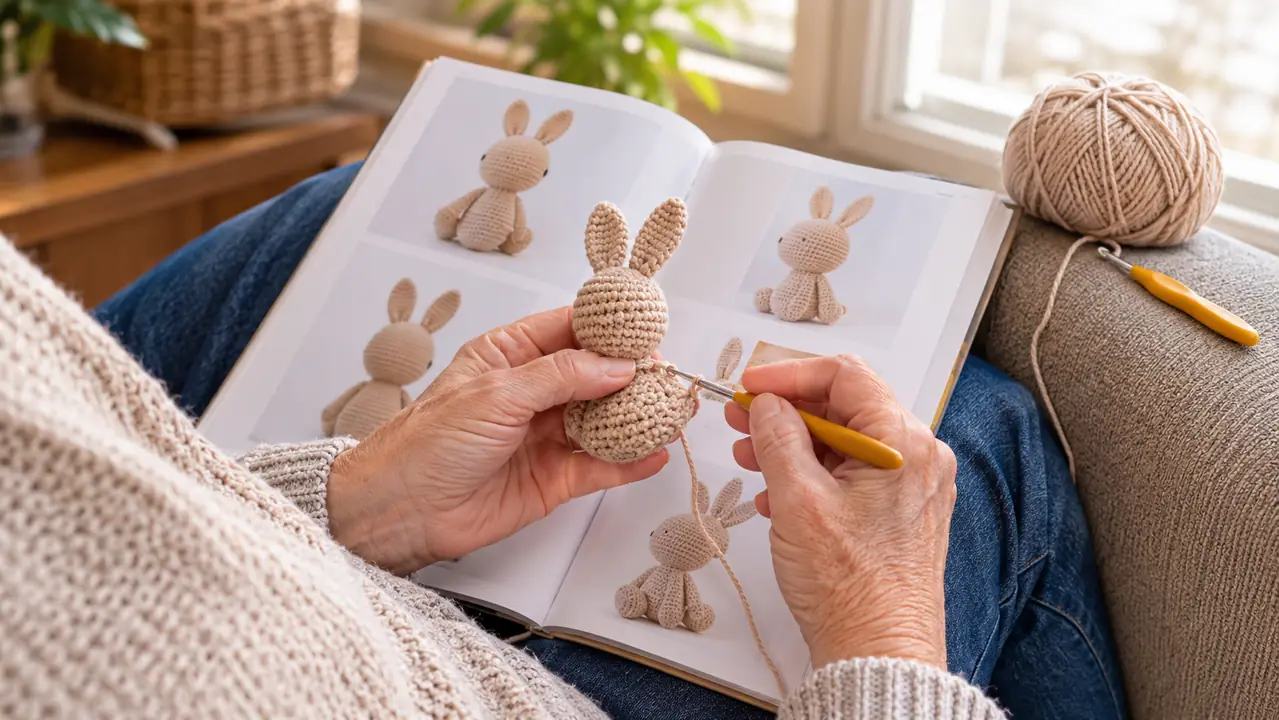
Here is the honest part. The title promises more than 100 custom critters, and that number is real, but it is real the way a recipe collection is real: you still have to cook. The book gives you 20 base patterns and a way to combine shapes, colors, details, and yarns. The combinations are yours to make. If you are the kind of crocheter who follows a pattern line by line and never looks up, this book will ask you to look up a lot. That is not a flaw. It is a personality test, and the book is honest about it in a way that most craft books are not.
A friend from my yarn circle borrows the book and makes everything exactly as pictured. I make everything with longer ears or a different tail or yarn from my stash that looks nothing like the photo. Both of us are using the book the way it was meant to be used. But I wish someone had told me before I bought it that the book is half pattern and half permission slip to experiment. If you are hoping for 100 finished, photographed, ready-to-copy creatures, this is not that book. If you are hoping for a system that turns your stash yarn into creatures that look like yours, it is exactly that book.
The other thing nobody tells you: you will want a notebook. I keep a spiral notebook on the side table now, and every creature I finish gets a sketch and a few notes: which base, which ears, which yarn, what I would change next time. Without the notebook, I would have re-figured out the same customization three separate times. With it, I am building my own little library of creatures, which is honestly more fun than the book alone. The book gives you the building blocks. The notebook is where your own patterns start to live, and that is the part the marketing never mentions.
My first finished creature was a small round fellow with long ears, made in a cream yarn from my stash. He was not perfect. His ears were slightly different sizes and his head sat a little crooked on his body. My granddaughter did not care. She named him Mister Wobble and carried him around for a week. That is when I understood what the book is really for. It is not for making perfect creatures. It is for making creatures that have your name on them, wobble and all.
The book is half pattern and half permission slip to experiment. That is the part no product photo ever shows you.
Where the Book Gets Fiddly
Now the cons, because a review with no cons is not a review. First, the small pieces. The craft means working in the round at a tight tension so the stuffing does not show through, and that is hard on my right thumb. I have mild arthritis there, and after an hour of single crochet into a tiny ring, I have to stop and stretch my hand. The book is not to blame. Every amigurumi pattern I have ever tried does this. But if you have hand pain, plan short sessions and do not expect to finish a creature in one sitting. I usually get one body and one head done before my thumb votes no.
Second, the book is a reference, not a cover-to-cover read. I tried reading it like a novel the first night, and it does not work that way. It is organized around the system, so you will flip back and forth between the base patterns and the detail options. That is fine once you understand it. It is confusing for the first hour. I nearly gave up and went back to a granny square before I figured out the rhythm. Give yourself one evening just to page through it and make a few notes before you start your first creature. The book rewards that patience.
Third, and this is the one I wrestle with most: the finished size of your critter depends on your yarn and your tension. The book can show you a shape, but my first creature came out noticeably bigger than the photo because I crochet loosely and used a thicker yarn. That is the nature of the craft, not a failure of the book. But if you are someone who needs the result to match the picture exactly, you will need to swatch, measure, and adjust as you go. The book does not hold your hand through that. It assumes you are willing to experiment, and that assumption is the whole spirit of the thing.
What Held Up After Months of Use
I have now made eleven creatures from this book, give or take, and the thing that has held up is the system itself. The 20 base patterns are simple enough that I can memorize one after a single project. The detail options give me just enough structure to feel creative without feeling lost. I have used yarns from my stash that the book never pictured, and the creatures still look like proper little animals. That is the real test of a pattern book: not whether the first project works, but whether the twentieth one still feels fresh. This one passes.
The book has also survived the cat. Pickles chases any loose yarn tail, and the book has been batted off the side table twice. The pages are holding up fine, no creases in the spine that I did not put there myself. I have loaned it to a friend twice and it came back in the same shape. For a book that lives in a busy house, that is a recommendation. I will say the corners show some wear from sliding around the side table, which is fair for a book that gets used weekly instead of shelved.
I have also tested the book against my own worst habit: starting a project and abandoning it. With single patterns, I abandon them constantly. With this book, I have finished eleven out of eleven creatures I started. I think the reason is the notebook. Because I am making small decisions as I go, I am invested in the creature before it is half done. It stops being a pattern and starts being my idea. That is a subtle thing, but it is the difference between a book that sits on a shelf and a book that gets used.
What I'd Tell a Friend at the Yarn Circle
If you and I were sitting in the yarn circle and you asked me whether to buy this book, here is what I would say. Buy it if you already know how to crochet in the round and you are tired of making the same four creatures everyone makes. Buy it if you have a stash of yarn and a drawer of half-finished ideas. Buy it if you like a little structure with your creativity. Do not buy it if you want a pattern that tells you every single stitch and never asks you to think. Do not buy it if you are hoping for 100 ready-made patterns you can follow without deciding anything.
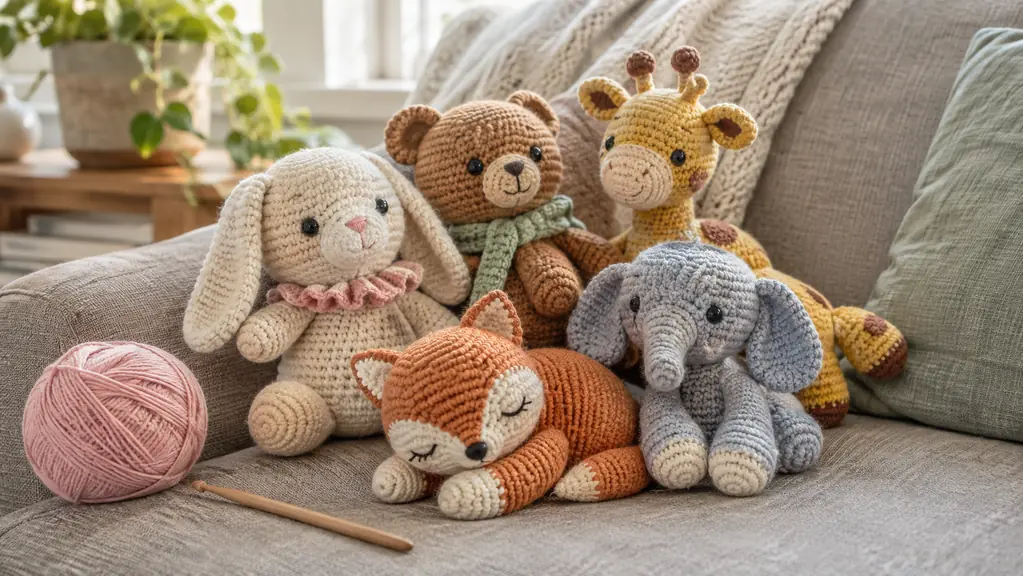
And do not buy it expecting the creatures to come out exactly like the photos. They will come out like your yarn, your tension, and your choices, which is the entire point. I have made eleven creatures and not one of them looks like the book's pictures. They look like mine. My granddaughter asked me last week if I could make her a creature with extra-long ears in purple, and I could, because the book gave me the system to do it. That moment is worth the book all by itself.
What I Liked
- The 20-pattern system is genuinely reusable; I have made eleven creatures and it still feels fresh
- Large, readable pages and a size that stays open on a side table
- Encourages stash yarn instead of demanding specific purchases
- Honest about being a system, not a coloring book
Where It Falls Short
- The customization means you make decisions before you crochet; not a zone-out book
- Tight, small-round work is hard on arthritic hands
- Finished size depends on your yarn and tension, so results vary from the photos
- The first hour is confusing until you learn the system's rhythm
Who This Is For
The Amigurumi Friends book is for the crocheter who wants to make gifts that do not look like everyone else's. It is for the grandmother who wants to make creatures for grandkids and is tired of the same few patterns floating around the internet. It is for the person who has a stash of yarn and a notebook habit. It is for the crocheter who is confident with single crochet, increases, and working in the round, and who wants a system instead of a single pattern. If you like a little structure with your creativity, this book will click with you.
Who Should Skip It
Skip it if you are brand new to crochet and need every stitch spelled out. Skip it if you want 100 ready-made patterns you can follow without thinking, because this book gives you 20 bases and asks you to do the combining. Skip it if hand pain makes tight, small-round work miserable, because amigurumi is nothing but tight, small-round work. And skip it if you need your finished creature to match the photo exactly, because your yarn and tension will always have their own opinion. There are single-pattern downloads that give you one critter with no decisions required, and on some evenings that is exactly the right tool. This book is for the evenings when you want to design a little.
Still on the fence? That is exactly what an honest review is for.
I have made eleven creatures, kept a notebook full of notes, and I still reach for the Amigurumi Friends book every week. If that sounds like how you like to crochet, check today's price on Amazon. If it does not, save your money and buy a single pattern. Both are honest answers, and both are better than buying the wrong book.
Amazon Check Today's Price on Amazon →