
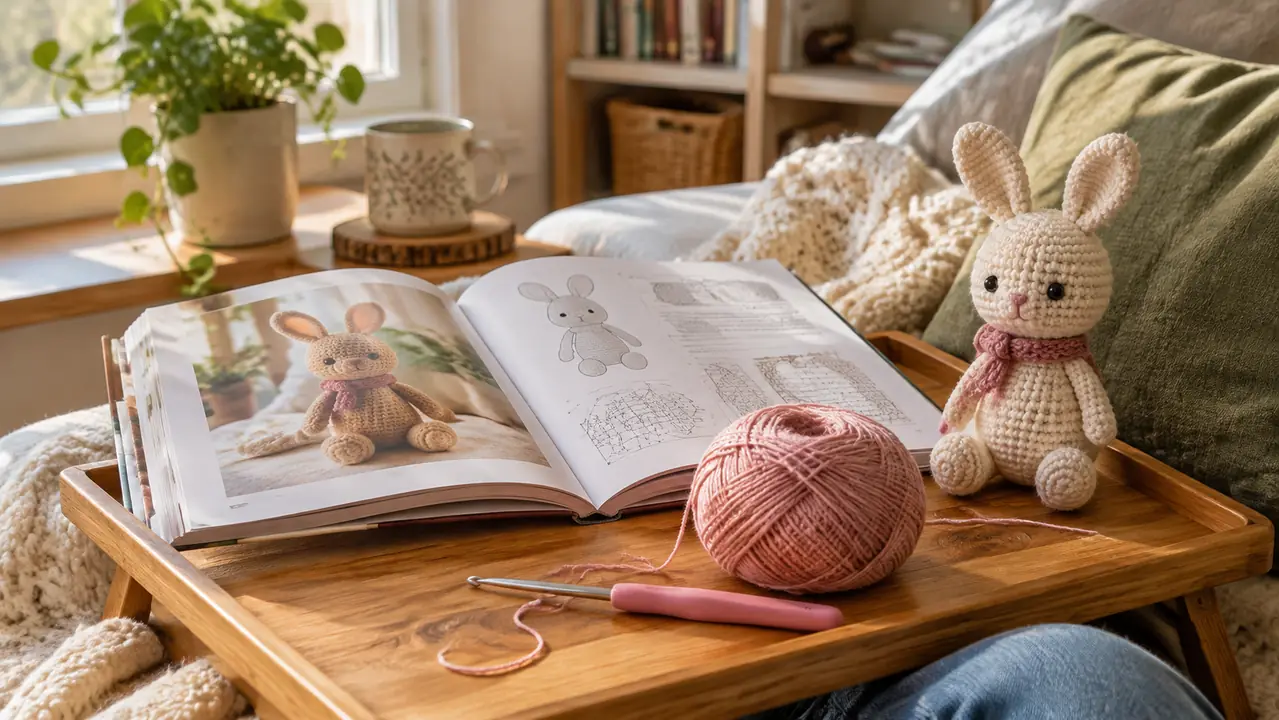
If you have ever bought a crochet pattern book and then left it on the shelf with a bookmark at page three, I understand. I have a shelf full of those. When I first opened Amigurumi Friends, I expected another pretty collection I would flip through once and forget. Instead, it has become the book I reach for when I want to make something small and cheerful for my grandchildren, and I have used it steadily for months.
I am Rosalind Brackett, 63, a retired school librarian in Wichita Falls, Texas. I learned to crochet from my grandmother when I was nine, and after I retired I picked it back up in a serious way. My hands are not what they used to be, and my right thumb complains if I grip a hook too hard. So when I tell you a pattern book is worth your time, I mean it survived the test of a woman who has frogged more projects than she has finished.
The Quick Verdict
A genuinely useful pattern book that lives up to its promise of easy patterns and endless customizing. Keep your expectations realistic: it is a starting point, not a complete course.
Amazon Check Today's Price →The pattern book that actually stays on my side table
If you want one book that will carry you from your first stuffed bunny to your own critter designs, Amigurumi Friends is worth a spot next to your yarn basket. It is the book I keep reaching for, and I think you will too.
Amazon Check Today's Price on Amazon →How I've Used It
I have been crocheting from this book for about eight months. That is a long time for me. Most pattern books get one project and then go back on the shelf. This one has been on my lap table since the week it arrived, and it has yarn dust on the cover, which is the highest compliment I can give a craft book.
The book is 144 pages, and it is light enough at 10.4 ounces for me to hold in one hand while I work, which matters when your thumb is already sore. The dimensions are generous, about 8.53 by 10.78 inches, so the pages have room to breathe. I can spread a pattern out on the arm of my chair and still see the next step without hunting for my glasses.
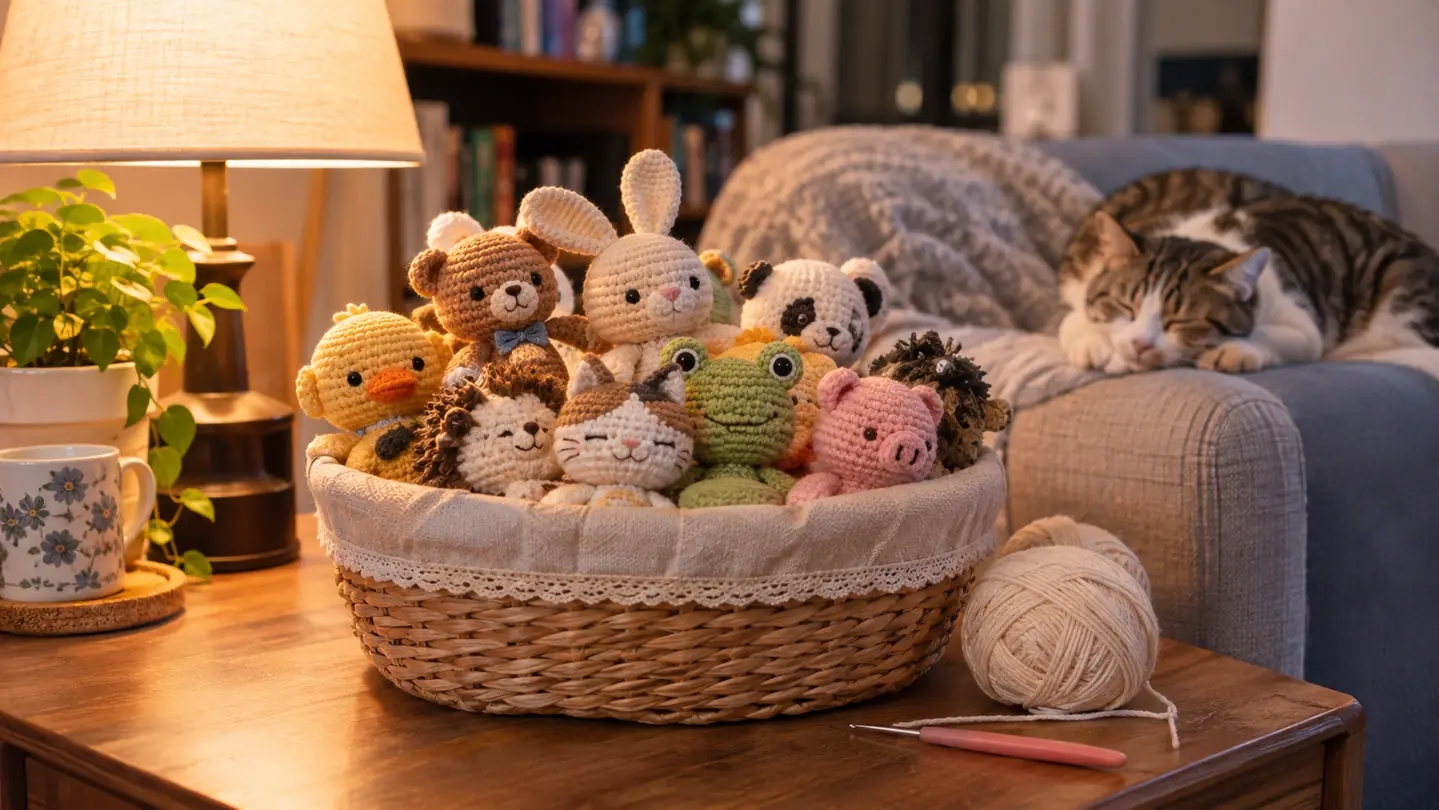
I have made a small menagerie from it: a bear for my oldest granddaughter, a bunny for the baby of the family, a turtle for a friend going through treatment, and a cat that Pickles, my orange tabby, has decided belongs on his windowsill. Pickles does not chase the finished animals. He only chases yarn tails, so I keep my working yarn in a basket with a lid when I am not actively crocheting.
The book has also survived something that kills most craft books in my house: Pickles. He is an 11-pound orange tabby who believes any yarn tail is a toy. He has batted this book off the side table twice, and the pages are still attached. That is not a scientific review, but it is a real one.
What You Get in Those 144 Pages
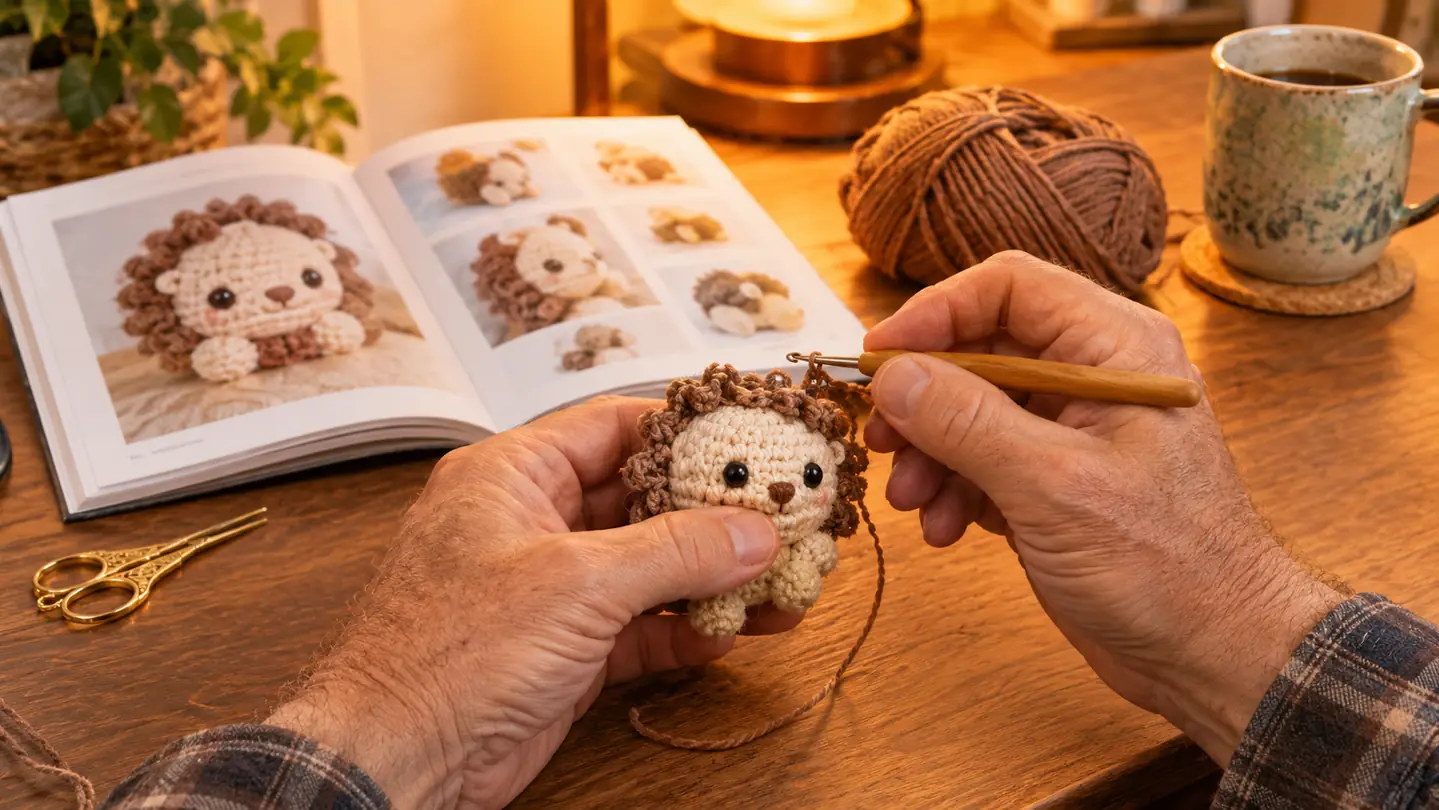
The title says 20 easy patterns that can become more than 100 custom critters, and that is not a marketing exaggeration. The book is built around the idea that you can change ears, tails, colors, and little details to make one basic shape into a completely different animal. That is the part I have used the most.
The book is published by Quarry Books, and it came out in June 2024. I mention that because it is a modern book, written for the way people actually crochet now. It does not assume you have a stash of specialty yarns. It assumes you have basic skills and a desire to make something cute.
I cannot tell you every yarn weight the book recommends, because I am the kind of crocheter who uses whatever is in the basket. I can tell you that the patterns worked with the worsted weight yarn I had on hand, and that the finished critters came out the size I expected. For me, that is the real test of a pattern.
The book is not a beginner course. It assumes you know how to make a magic ring, work in the round, and count your stitches. If you know those things, the patterns are genuinely easy. If you do not, you will want a basic how-to book beside it.
How the Patterns Read After Months of Use
The best thing I can say about the instructions is that I stopped needing to read them out loud after the first few projects. The patterns follow a rhythm, and once you make one animal, the next one feels familiar. That is exactly what I want from a book like this.
I have also used the book the way it seems designed to be used: as a starting point. I made the basic bear body and then changed the ears to make a mouse. I made the bunny and left the ears shorter to make a kitten. My granddaughter asked for a unicorn, and I used one of the basic shapes with a crocheted horn. None of that required me to invent anything complicated. The book's whole point is that you can mix and match.
The large pages give the patterns room to breathe, and I never had to squint to find the next step. The instructions are laid out in a way that makes sense to me, with the important details close enough to see. For someone with arthritis, being able to see where you are going before you start saves a lot of unproductive crocheting.
I keep a stitch marker in the spine and a scrap of yarn as a bookmark, because I like to keep my place without bending the pages. That is a small thing, but it is the kind of small thing that decides whether a book gets used or ignored.
What I Made, and What I Learned
My first project was a bear, and it looked like a potato with ears. My second bear looked like a bear. That is the honest review of almost every crochet pattern I have ever tried. The book did not make me a better crocheter overnight, but it gave me patterns that were forgiving enough to let me improve.
The biggest thing I learned is that the custom part is not a gimmick. Once you understand the basic shapes, you stop needing the book to tell you every single detail. I have made a whole row of little animals for a charity craft table at my church, and each one is slightly different. People ask me where I got the patterns, and I tell them the same book, over and over.
I have also learned which parts are fiddly. Small limbs are fiddly. Sewing ears onto a head is fiddly. If you are making a critter for a baby, you will want to sew everything on extra securely, because little hands find the weak spots. The book's patterns are easy, but easy does not mean zero assembly.
I have made the same bear pattern three times now, and each one has a different personality. That is the thing I did not expect. I thought the customizing would be about colors and details, and it is. But it is also about the small ways your hands make the stitches your own. No two critters from this book have ever looked exactly alike.
Once I had made the first bear, the second one looked like a bear. That is the highest compliment I can give any pattern book.
The Honest Tradeoffs
No book is perfect, and this one has a few things I would change. At 144 pages, it is not an encyclopedia. If you want a reference library of every possible animal, you will outgrow it. It is a starting point, and a good one, but it is not the last crochet book you will ever need.
The book assumes a certain comfort level with crochet. I handed it to a friend who learned to crochet last month, and she felt lost. She needed a beginner book first. If you are brand new to crochet, buy a basic stitches book before you buy this one. If you already know how to work in the round, you will be fine.
I also wish the book had a few more projects that used chunky yarn. My arthritic thumb prefers a thicker hook and a softer yarn, and some of the small critters use finer yarn than I would choose. That is a preference, not a flaw, but it is worth knowing before you buy.
None of these tradeoffs changed my overall opinion. I have used this book more than any other crochet book I own, and I expect to keep using it. That is the highest praise I can give.
How It Compares to the Alternatives
Before I bought this book, I used a lot of single pattern downloads. They are fine, but they pile up. I have a folder of PDFs on my tablet, and I never remember which one has the bunny I liked. A book solves that problem. Everything is in one place, and I can flip through it the way I flip through a cookbook.
I also tried free patterns online. Some of them are wonderful. Some of them are written by people who assume you already know the thing they forgot to write down. The patterns in this book are more consistent, and that consistency matters when you are sitting in a recliner at nine o'clock at night.
The book is a different kind of purchase than a single pattern download. What it gives you is range. Twenty patterns and the ability to turn them into more than 100 critters is a different kind of value, the kind you only notice after months of use.
I have not stopped using the downloads entirely. There are designers whose style I love and will keep buying. But for a dependable, pick-it-up-and-go project, this is the book I grab first.
What I Liked
- 20 easy patterns that actually produce recognizable critters
- The customizing system makes one book feel like many
- Large pages and light weight make it comfortable for long sessions
- Honest about being a starting point, not a complete course
Where It Falls Short
- Not for absolute beginners
- Small parts and assembly can be fiddly
- Some patterns use finer yarn than arthritis-friendly hands prefer
- At 144 pages, it is not a comprehensive reference
Who This Is For
This book is for crocheters who already know the basics and want to make something cute without a lot of mental math. It is for the woman at the yarn circle who has made a dozen baby blankets and wants a new challenge, and for the grandmother who wants to make a menagerie for the grandkids. If you can work in the round and you do not panic when a pattern says increase evenly, you will get your money's worth out of this book.
If you are the kind of crocheter who likes to follow a pattern exactly and never stray, you will still enjoy this book. The base patterns are solid on their own. You do not have to customize anything. The option is there, but it is not a requirement.
I would also say this book is for people who like to give handmade gifts. There is something about a small animal that a child actually recognizes that no store-bought gift can match. The book makes that easy enough to do on a Tuesday night.
Who Should Skip It
If you have never picked up a crochet hook, this is not the book to start with. You will need a basic stitches guide first. If you prefer written instructions that hold your hand through every single step, this book may feel too loose. And if you are looking for a giant reference library with every animal under the sun, 144 pages will not satisfy you. This is a friendly, practical starting point, not a complete education.
I would also skip it if you are looking for a gift for someone who does not already crochet. A beginner will need a separate stitches guide, and that makes this a less obvious present. For a crocheter who already has the basics, it is a different story.
And if you are the kind of crocheter who only makes blankets because amigurumi seems too fiddly, this book might change your mind, but it might not. The small parts are real. I would rather you know that now than discover it after you buy.
If you are still deciding, here is the short version. Amigurumi Friends is a friendly, practical pattern book for crocheters who already know the basics. It will not teach you everything, and it does not pretend to. What it does, it does well, and it has earned a permanent place on my lap table.
The book I keep coming back to
If you are ready to make your first custom critter, or your twentieth, Amigurumi Friends is the pattern book I would hand you across the yarn circle table. It has earned its place on my lap table, and I think it will earn one on yours.
Amazon Check Today's Price on Amazon →