
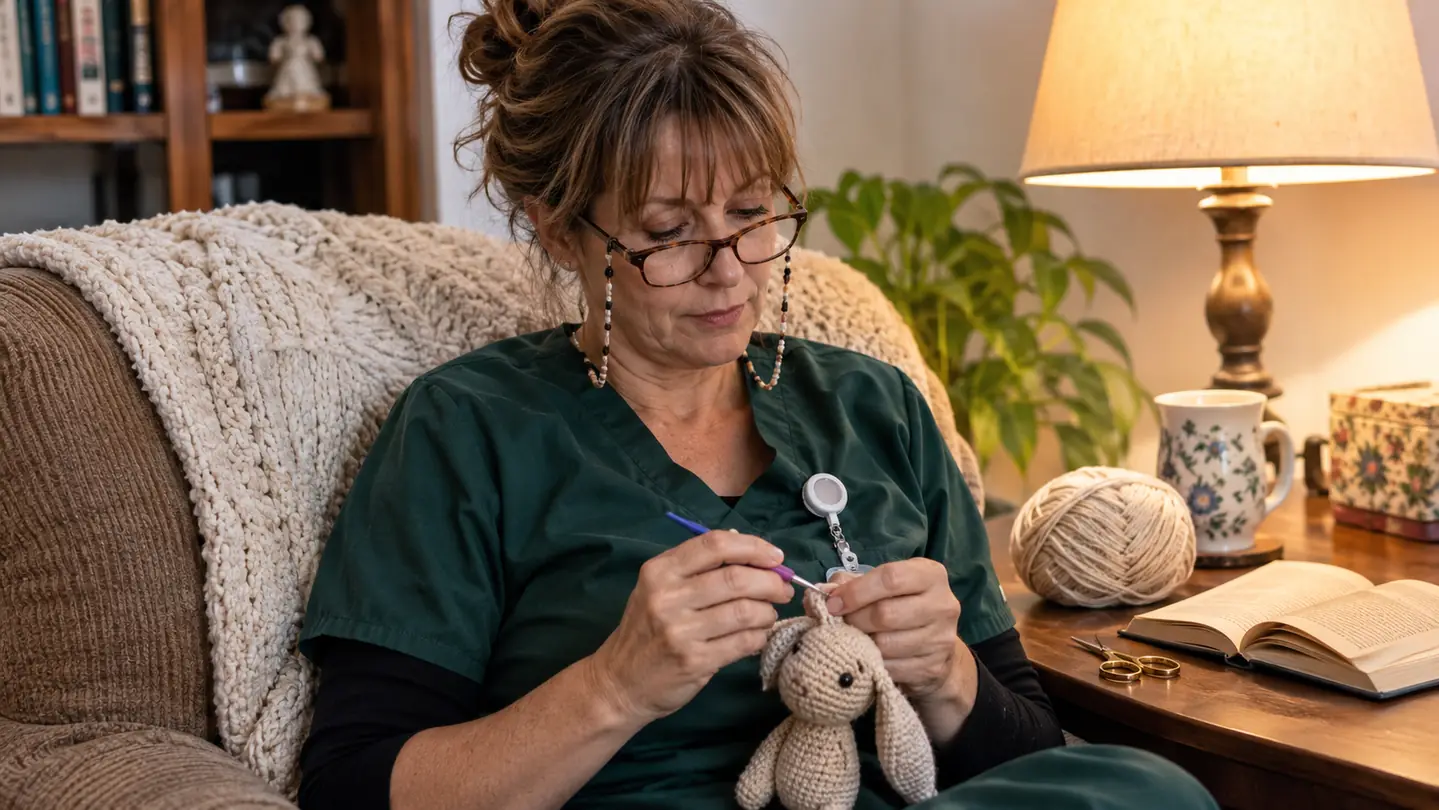
I have been crocheting since I was nine, and for the first six years after I picked it back up, I collected free patterns the way Pickles collects loose yarn tails. My browser bookmarks were a mess, my printer tray was a mess, and my project bag was a mess of half-finished critters that never looked like the photos. Then a friend showed me her copy of Amigurumi Friends, I bought my own, and she told me to actually read the front matter. That one habit changed more of my finished projects than any new hook ever did. If you have been stitching from scattered free patterns and wondering why your amigurumi come out lopsided, here are ten reasons a real pattern book earns its place on your side table.
Start with a book that teaches the method, not just the critter
Amigurumi Friends walks you through 20 patterns with the same shaping principles behind every one, so your free-pattern projects finally come out looking like the picture.
Amazon Check Today's Price on Amazon →One consistent set of stitch instructions
Every free pattern I found wrote increases and decreases a little differently. One used 'inc', another wrote '2 sc in next st', and a third expected me to know that 'sc2tog' meant the same thing as 'sc dec'. Last March I started a bunny from one site and a bear from another on the same afternoon. The bunny said 'dec around' and the bear said 'sc2tog', and by supper I had two heads with different stitch counts because I had read the shorthand two ways. I frogged both and started over. A book from Amigurumi Friends uses the same terms on page 10 and page 130, so your hands learn one rhythm instead of relearning it every weekend.
The shaping math is checked before it reaches you
A free pattern once told me to increase around a magic ring until I had 12 stitches, then work even for six rounds, then decrease back to six. My critter looked like a beanbag. That was the raccoon I tried to make for my oldest grandchild's birthday in April. I tried pulling the stuffing tighter, then I tried adding more, then I frogged the whole head twice before I gave up and crocheted a hat instead. The hat had no ears and nobody complained, but I still think about that raccoon every time I read a pattern that skips the shaping notes. Books go through editors and test crocheters. When a pattern says your head will be round, it has been round for somebody already.
You learn the system, so free patterns get easier too
The real gift of a book is the method. Once you understand how heads, bodies, ears and limbs attach, a free pattern stops being a mystery and becomes a list of choices. I still use free patterns for little extras, but now I read them the way I read a recipe, knowing which steps matter and which ones I can bend.
You can see the finished size before you start
Scattered free patterns rarely tell you what you are getting into. I once spent a week on a 'cute little owl' that finished the size of a throw pillow. That owl was meant for a newborn niece, and it measured fourteen inches across when I finally wove in the last tail. I set it next to the throw pillow on my den chair and laughed out loud. The patterns in this book give you the finished dimensions up front, so this June, when I made the same niece a bunny, I knew before I started that it would fit in her hands. You can match the critter to the grandkid, the gift, or the charity bin before you invest the hours.
One book holds more than a hundred finished possibilities
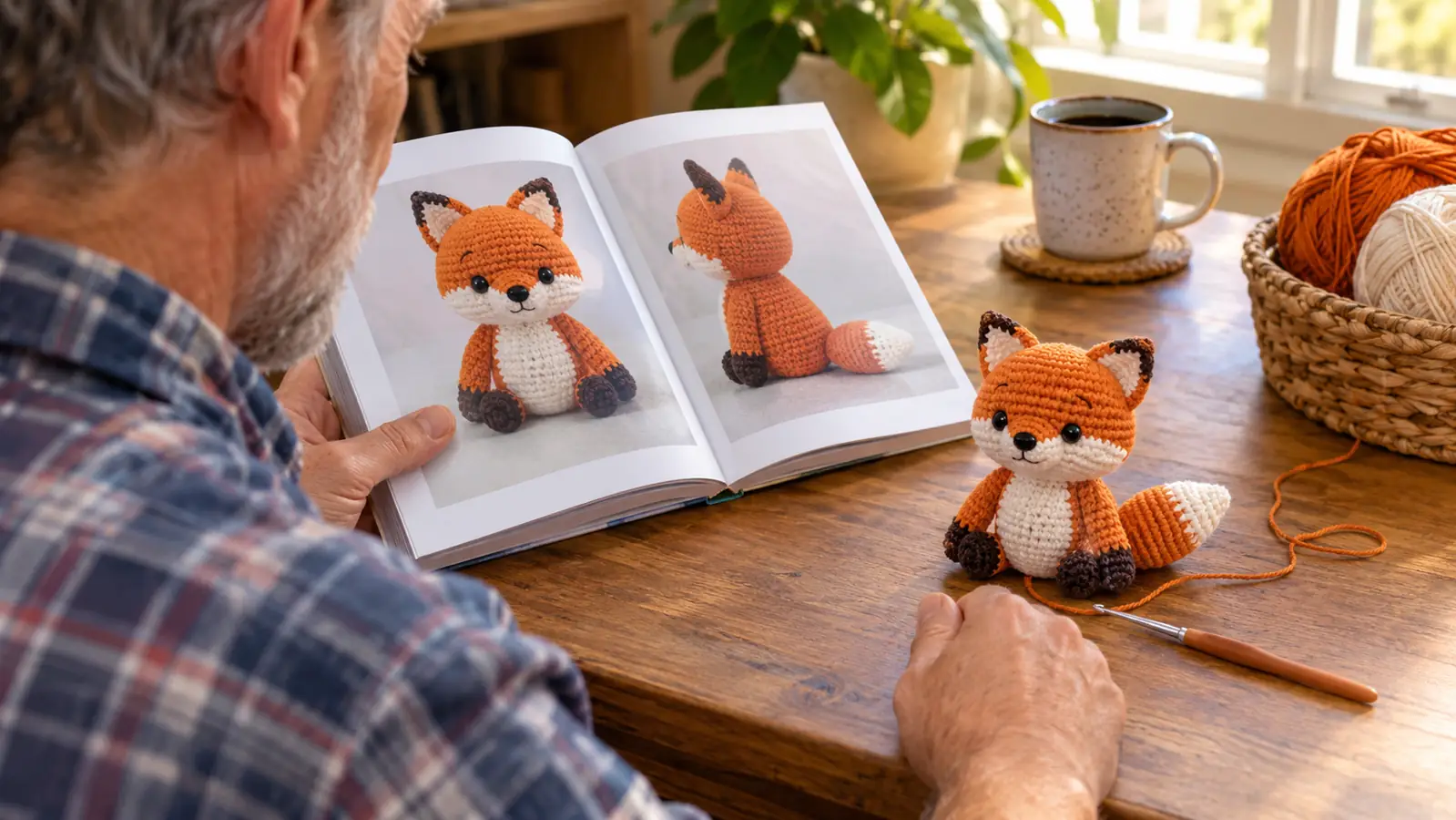
Twenty base patterns sound modest until you realize the whole point is mixing shapes, colors, details and yarns. Change the ears, swap the snout, use a different yarn weight, and the same body becomes a rabbit, a bear, or something only your grandchild could name. Last month I made the same base body twice, once with round ears and once with pointy ones, and my granddaughter could not decide which critter she loved more, so she kept both. That is a hundred critters from one 144-page book, and it all lives in one place instead of forty browser tabs.
The pages stay put while your hands are full
I have tried crocheting from my phone. The screen sleeps, the page scrolls, and suddenly I am holding a half-finished ear in one hand and fighting the phone with the other. One Tuesday evening I was working on a hedgehog for the hospital charity drive, right in the middle of an increase round, when the screen went dark. My thumb swipe zoomed the page so far in that I could not find my row, and I finished the round by counting stitches by feel. The book has never once done that to me. A printed book stays open on my side table, the way my grandmother's pattern leaflets used to stay open on hers. With my arthritis, the last thing I need is a project that requires three hands.
You can write in the margins without guilt
My copy has notes everywhere: 'this row is fiddly, go slowly', 'use the smaller hook here', 'Pickles stole the yarn tail at this exact spot'. You cannot scribble on a PDF the way you can on paper. A book becomes your personal record of every critter you have made, and six months later that note saves you the exact mistake you already made once.
It works even when the internet does not
My den is the one spot in the house where my tablet loses the signal, which is exactly where I like to crochet. A book does not care about the router. No waiting for images to load, no pop-up ads, no video that autoplays at full volume while a baby is napping down the hall. Just the pattern and me.
The quality bar is higher than a blog post
Anyone can publish a free pattern. That is wonderful and also a little dangerous. A published book from Amigurumi Friends went through an editor, a designer and a printer. The photos are clear, the stitch counts line up, and the yarn amounts actually match the critters. After a few projects, you start to trust the book the way you trust a favorite cookbook.
It makes a better gift than a stack of printouts
The last time I gave a crochet book to my sister, she actually used it. A tidy 8.53 x 10.78 inch book fits in a gift bag, survives the trip, and sits on her coffee table instead of getting buried under the mail. If you know someone who keeps saying they want to learn amigurumi, hand them a real book and see what happens.
What I'd Skip
If you already have a shelf of amigurumi books and you only want one specific critter, you do not need another book. A single free pattern is fine for a one-off project. I would also skip this one if you are looking for a tiny pocket guide; at 10.4 ounces and 144 pages, it is a real book, not something you tuck in your purse. And if you hate following a printed page and prefer video tutorials, no book will ever replace the voice in your ear. But if you are the kind of crocheter who wants the critter to come out looking like the picture, this one earns its spot.
Twenty base patterns sound modest until you realize the whole point is mixing shapes, colors, details and yarns.
Give your next critter a fair start
You can keep hunting through scattered free patterns, or you can let one well-edited book teach you the method. Amigurumi Friends has 20 patterns and more than 100 finished possibilities waiting for you.
Amazon Check Today's Price on Amazon →