
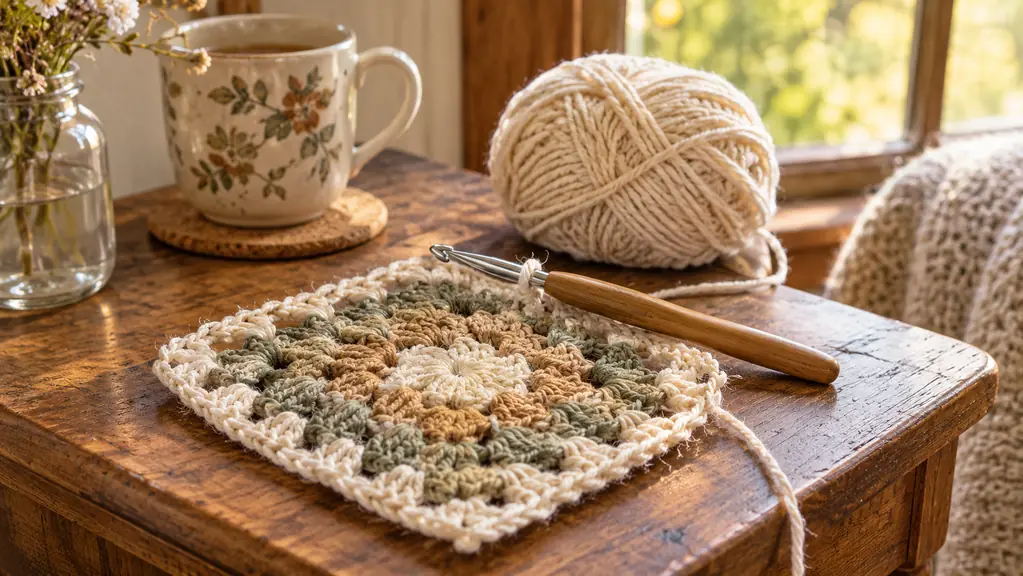
Plain metal hooks are what I learned on at nine years old, sitting on my grandmother's porch with a ball of Red Heart and a size G hook I still own. Fifty-four years later, that hook still lives in my basket, but it is not what I reach for when my right thumb starts to complain. I bought the Yarniss ergonomic hook set at the beginning of March, and after about six months of nearly daily crocheting, I have a clear answer for anyone who keeps eyeing those padded handles. For hand comfort, the Yarniss hooks win, and it is not close. For everything else, it depends on how you crochet and what your hands can take.
Here is the short version. If you crochet for more than an hour at a stretch, or if your hands already ache by the time you put the project down, the silicone grip on these hooks is a real difference, not a marketing one. If you crochet a few rows before bed and never feel it the next morning, a plain metal hook is lighter and perfectly fine. I would not have believed the grip mattered that much until I spent a week going back and forth between the two, making the same dishcloth pattern with both. My thumb told me the truth by Wednesday.
| Yarniss Ergonomic Set | Plain Metal Hook | |
|---|---|---|
| Grip comfort | Silicone handle cushions the thumb and fingers during long sessions | Bare metal with no cushioning |
| Cost to start | A 20-piece set is a bigger upfront purchase | A single hook is the least expensive way to begin |
| Size range | 20 sizes from 0.5mm to 10.0mm, color coded and printed with sizes | One size at a time; you buy each hook separately |
| Weight in the hand | The grip adds a little bulk; the full set weighs 0.46 kg in its case | A single hook is featherlight |
| Stitch feel | The silicone mutes some of the feedback through the hook | Bare metal gives a direct feel for the yarn |
| Hand fatigue | Made for arthritic hands; eases thumb strain on long projects | Long sessions can aggravate the thumb |
| Storage | All-in-one case with an insert plate, 13 large elastic bands and 10 small elastic slots | You supply your own case or roll |
| Warranty | 90-day manufacturer warranty | No warranty to speak of |
The grip did not just feel nicer. It changed how long I could crochet before my thumb noticed.
How I Compared Them
I did not do anything scientific. I crocheted the same pattern, a simple dishcloth in worsted weight cotton, once with a plain metal hook and once with the Yarniss hook in the same size. Then I did it again with a granny square, then with a baby blanket in a heavier yarn. I timed how long I could go before the ache in my right thumb started, and I paid attention to which hook I reached for when I was not thinking about it.
I also paid attention to the things that never show up in a product photo. How easy is it to find the right size when the hook is in the case? Does the size marking stay readable after months of use? Does the hook catch on the yarn or slide smoothly? Does the case hold everything or does stuff drift to the bottom of the bag? Those small things are what actually decide whether a tool gets used or gets abandoned in a drawer.
For the plain metal side, I used the hooks I have kept since I was young, plus one new metal hook I picked up to make sure I was not comparing the Yarniss set against a worn-out antique. The metal hook did exactly what metal hooks do. It worked fine. That is the thing about plain metal hooks: they are dependable, and they are everywhere, and they are the least expensive way to start. The question is not whether they work. The question is whether your hands can keep up with them.
I also asked myself a question most reviews skip: would I buy this again? Six months in, the answer is yes, and I have already recommended the set to two friends at my yarn circle. One of them has worse arthritis than I do, and she bought a single ergonomic hook first instead of the whole set. That is a perfectly reasonable way to test whether the grip works for you before committing to twenty hooks.
Where Yarniss Wins
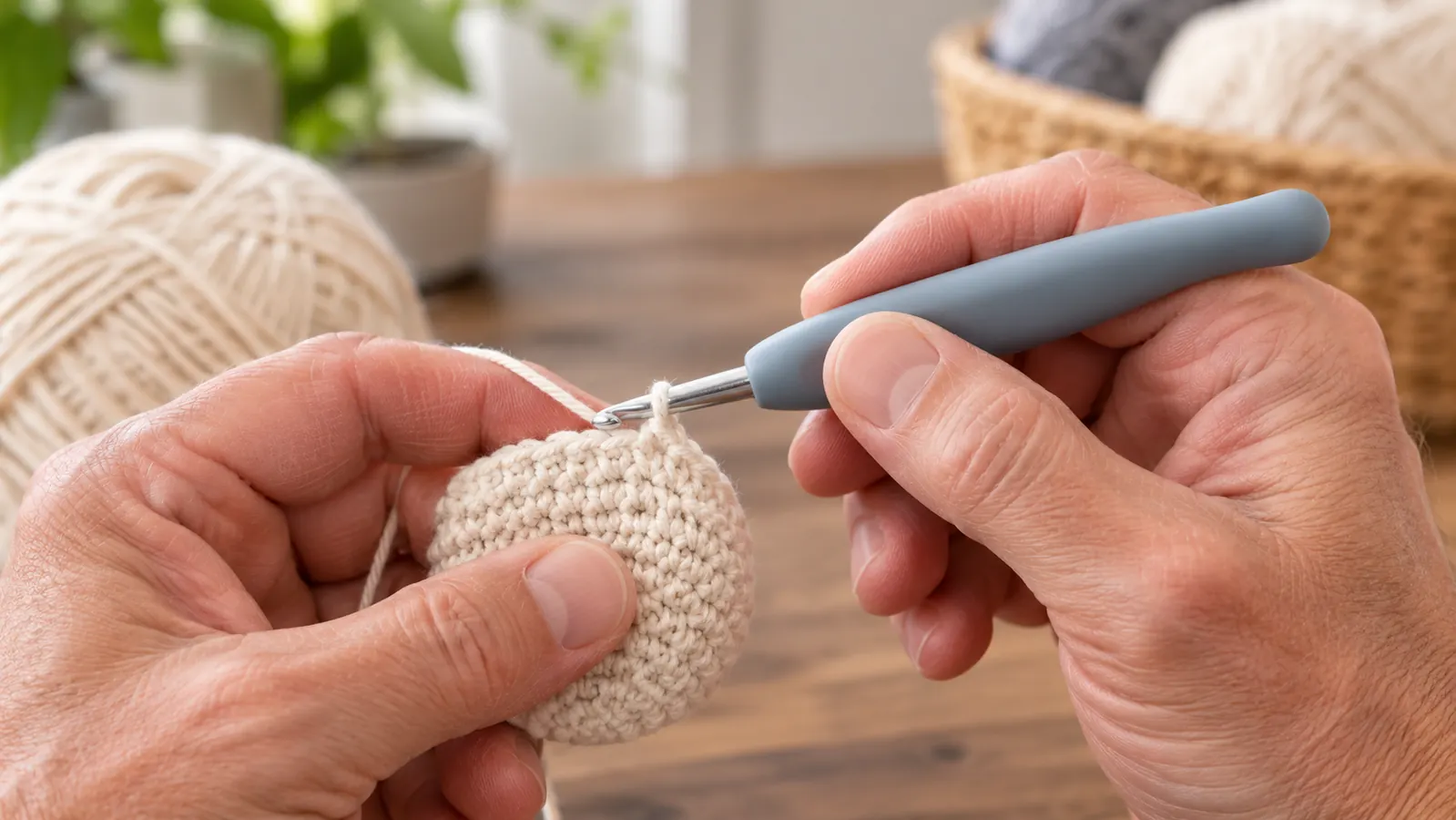
The biggest difference is the silicone handle. My mild arthritis sits right at the base of my right thumb, and with a plain metal hook, that spot starts to ache after about forty-five minutes. With the Yarniss hook, I have gone two hours on a granny-square throw and only stopped because Pickles decided the yarn tail was a toy. The grip spreads the pressure across my fingers instead of letting it all land on the thumb. That is not a claim I can prove with a measurement, but it is what I feel every single time.
The size range is the other big win. The set covers 0.5mm to 10.0mm, which means lace-weight doilies and bulky blanket yarn are both covered. The ten lace hooks from 0.5mm to 2.75mm are the ones I use for the charity hats, and the larger ergonomic hooks handle the baby blankets. Every hook is color coded and printed with its size, so I do not have to squint at a tiny engraving the way I do with my old metal hooks. When I am three rows into a pattern and the gauge is off, I can find the next size down in seconds.
The case matters more than I expected. It has an insert plate with 13 large elastic bands and 10 small elastic slots, and every hook snaps into a place. The 5.5mm hook is always where I left it. With my loose collection of metal hooks, I used to lose a size for months and then find it in the couch cushions. That has not happened once since March.
Where Plain Metal Hooks Win
I will be honest: a bare metal hook has a directness that the padded handle cannot match. You feel the yarn glide over the metal in a way that is muted by the silicone. For crocheters who work by feel, especially on fine thread, that feedback matters. The Yarniss hooks are not heavy, but the grip adds a little bulk, and the full set weighs 0.46 kg in its case. A single metal hook in your hand weighs almost nothing, which is a real advantage when you are working a long row of single crochet.
Plain metal hooks are also the least expensive way to start, and they are everywhere. If I forget a hook at home, I can pick one up at any craft store without thinking about it. The Yarniss set is a purchase you make once and take care of. Metal hooks are also easier to travel with. I keep a plain metal hook in the bag I take to the doctor's office, because I am not carrying a 20-piece case for a twenty-minute wait.
There is one more thing. For very fine lace work, many crocheters prefer the bare steel hook because the ergonomic handle can feel bulky in the hand. I still use my grandmother's steel hook for thread crochet on doilies. The Yarniss lace hooks are good, but the old steel hook just feels right for that particular job. Some habits are older than my arthritis.
Ready to give your thumb a break?
After six months of daily use, the Yarniss ergonomic set is what I reach for when I want to keep crocheting past the first hour. Twenty sizes from 0.5mm to 10.0mm, color coded and printed with sizes, all in a case that keeps every hook where it belongs.
Amazon Check Today's Price on Amazon →What Six Months of Daily Use Taught Me
The first thing I noticed with the Yarniss hooks was not the grip. It was how easy the hooks were to find. The color coding is not just pretty. When I am in the middle of a pattern and need to switch sizes, I can glance at the case and grab the right hook without reading a single number. My old metal hooks all look the same at a glance, and I have spent more minutes than I want to admit holding one up to the lamp to read the size.
The second thing was the yarn needles and stitch markers. They sound like filler, but they are the tools I actually use every day. Weaving in ends on a baby blanket goes faster when the needle is right there in the case. And the stitch markers have saved me on amigurumi rounds more times than I can count. When a pattern says to mark the first stitch of the round, I used to skip it because I did not want to hunt for a marker. Now I just reach into the case.
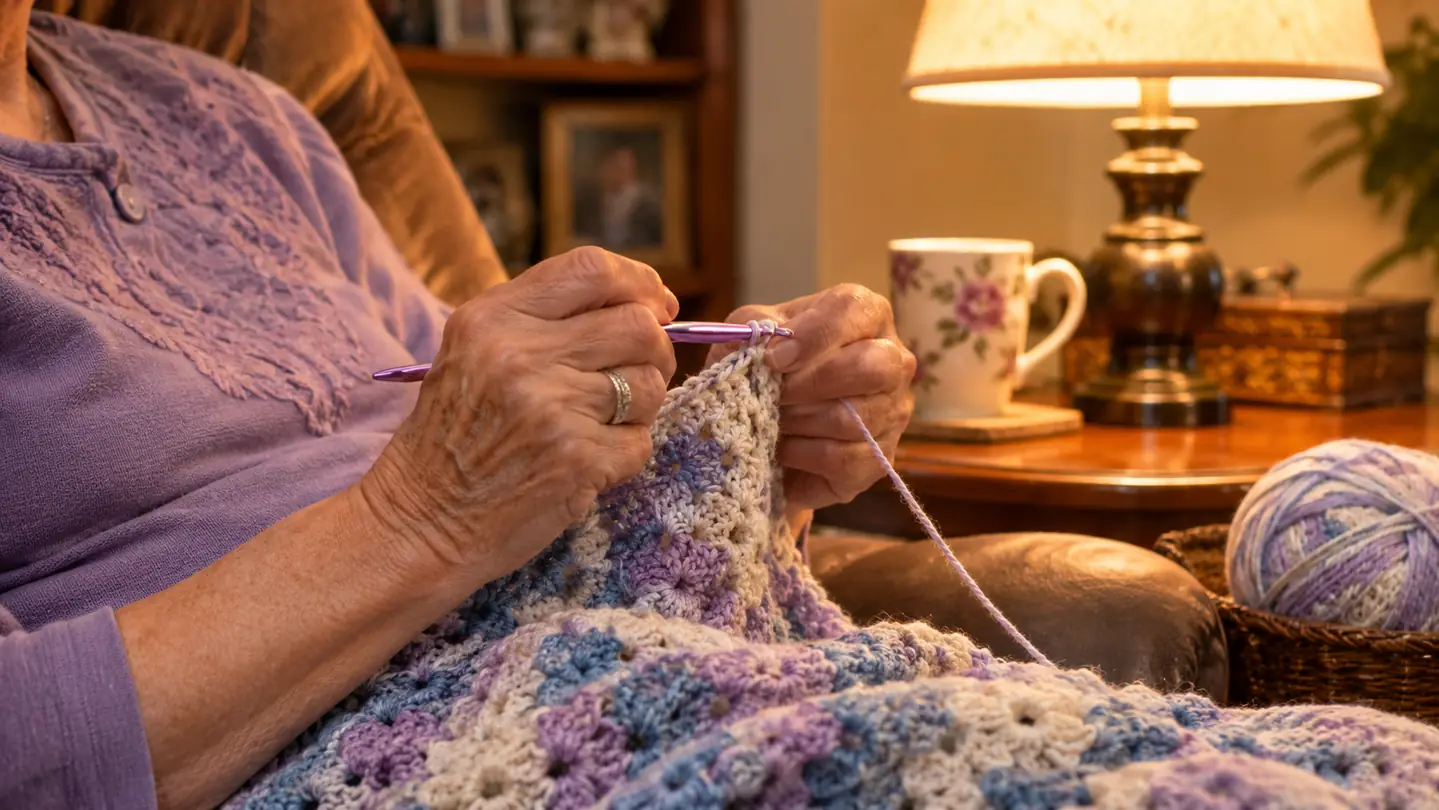
The third thing is harder to put into words. Crocheting stopped hurting. Not all the time, and not completely, but the difference between a forty-five minute session and a two-hour session is the difference between a hobby and a chore. My arthritis is not gone. It is just not the first thing I think about when I pick up a hook.
What Comes in the Case
The Yarniss set is not just hooks. It includes 20 crochet hooks from 0.5mm to 10.0mm, 6 yarn needles, 1 pair of scissors, and 20 stitch markers, all in the zippered case. I use the yarn needles for weaving in ends on every single blanket, and the stitch markers have saved me more times than I can count on amigurumi rounds.
The case itself is the part I did not expect to love. It is not a flimsy pouch. The insert plate holds the hooks in place with elastic bands and slots, so nothing rattles around. I keep the case on the side table next to my recliner, and when I want to switch from a 5.5mm to a 6.5mm hook, it takes about four seconds. The scissors are small but they cut yarn cleanly, which is all I ask.
The Honest Tradeoffs
No tool is perfect, and the Yarniss set has its quirks. The silicone grip means the hooks take up more room in a project bag than flat metal hooks do. If you like to stuff everything into a small notions pouch, the padded handles change how you pack. And because the hooks are color coded, you do have to look at the case to tell sizes apart at a glance, which is a small thing until you are used to grabbing a hook without looking.
The other tradeoff is the learning curve. The grip changes how the hook sits in your hand, and for the first few days it can feel almost too soft after years of bare metal. I nearly switched back on day two. Give it a week before you decide. The hooks also need a little more care than a plain metal hook, since the silicone can pick up lint and yarn fuzz. A quick wipe keeps them clean.
Who Should Buy Which
Buy the Yarniss set if you crochet often, if your hands ache after long sessions, or if you are tired of digging through a bag for the right size. Buy a plain metal hook if you crochet occasionally, if you prefer the bare feel of metal, or if you are just testing whether crochet is for you. And if you are somewhere in between, start with one Yarniss hook in your most-used size and see if your thumb notices the difference by the end of the week. That is what I wish someone had told me before I spent decades assuming aching hands were just part of the hobby.
One more note for anyone with arthritis or thumb strain. An ergonomic hook will not fix your hands, and it will not make you crochet faster. What it does is remove one source of strain so you can enjoy the part you actually love. If you already have a comfortable grip that works, there is no reason to switch. If your hands are telling you something is wrong, listen to them. That is the whole review in one sentence.
The hooks I reach for six months in
The Yarniss set has held up through daily use, a cat who steals yarn, and more frogged rows than I care to count. If your hands are telling you to switch, this is the set I would buy again.
Amazon Check Today's Price on Amazon →