
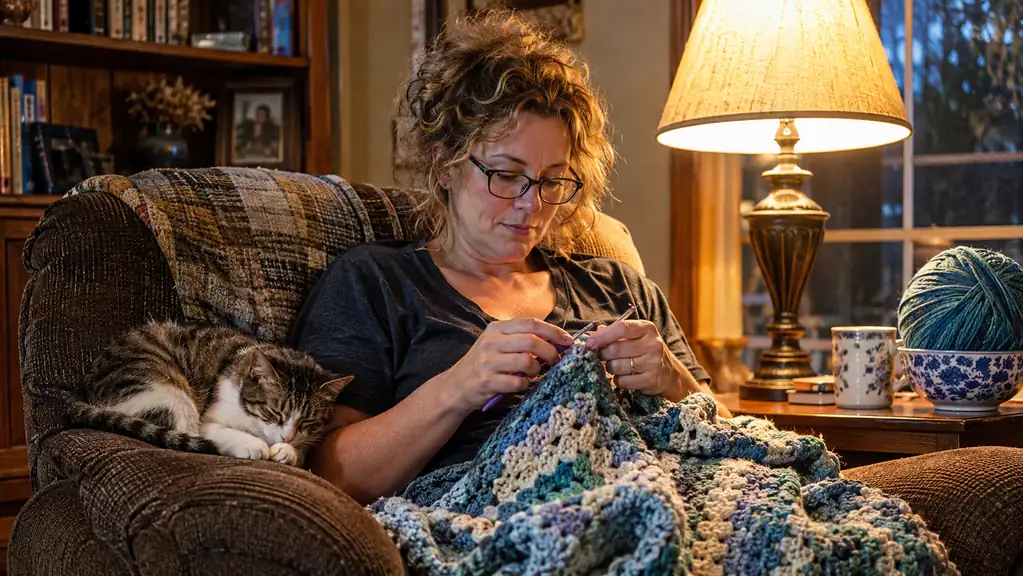
By nine o'clock on a Tuesday night, my right thumb had that familiar dull ache. I was three rows into a granny-square throw for my oldest granddaughter, and every stitch meant squeezing a slim metal hook my grandmother had used for forty years. I loved that hook. It just didn't love my arthritic thumb back.
I'm Rosalind Brackett, 63, a retired school librarian here in Wichita Falls, Texas. I have been crocheting since I was nine, when my grandmother sat me down with a ball of yellow yarn and a hook too big for my hand. I set it aside for decades, the way you do, then picked it back up about six years ago after I retired. Now I crochet most evenings in my recliner, making baby blankets, dishcloths, and hats for the local hospital's charity drive, while my cat Pickles bats at any loose yarn tail that hits the floor.
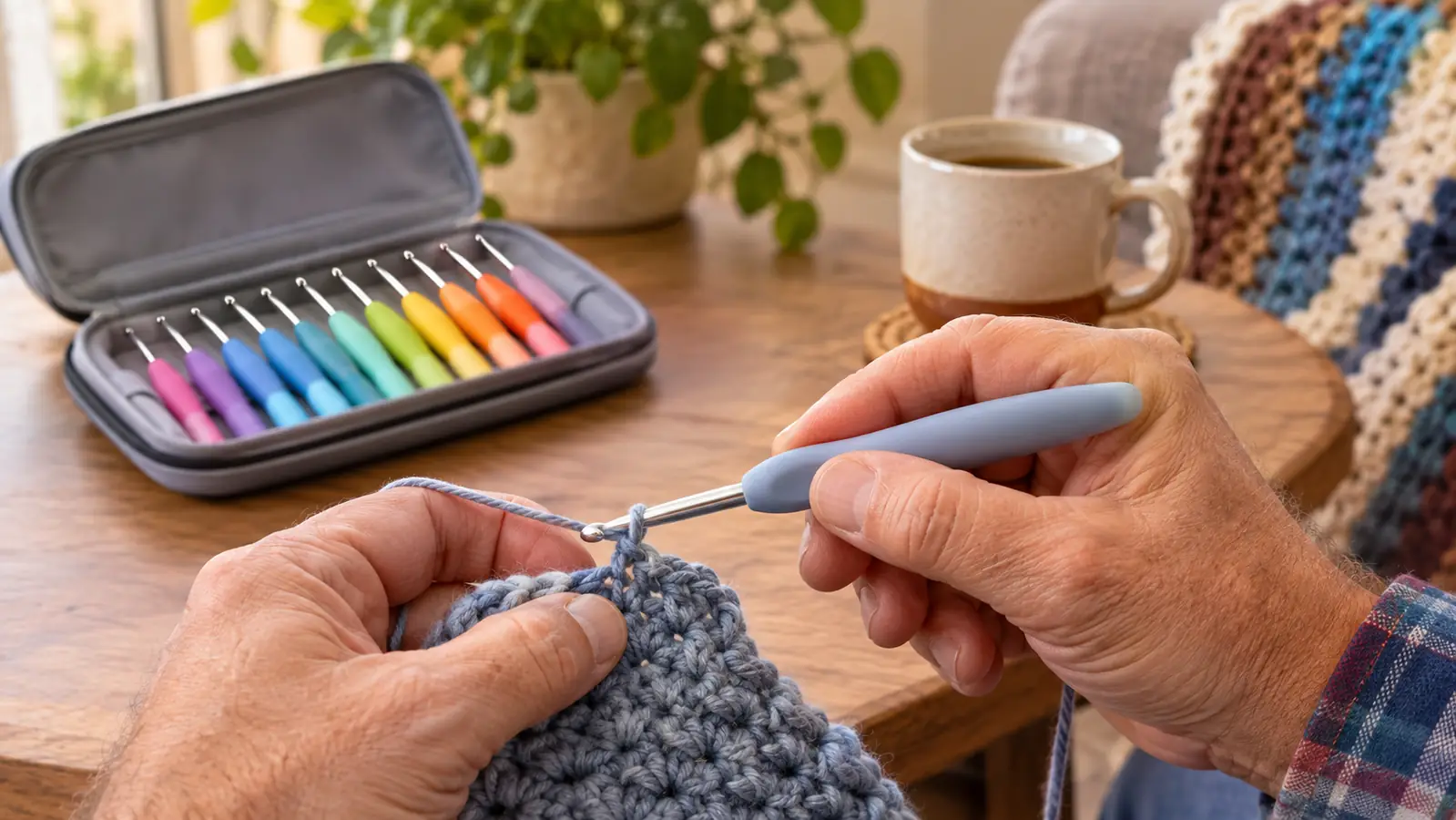
At the yarn circle, a friend mentioned she had switched to Yarniss hooks with silicone handles and said her hands stopped complaining. That got my attention, because the problem was my hands, specifically the thumb on my right hand. Mild arthritis, my doctor calls it. Some evenings it barely bothered me. Other evenings, like that Tuesday, every row felt like work. I went home and ordered the Yarniss 20-size set, mostly because the sizes ran from 0.5mm to 10.0mm and covered everything I might ever need.
The set arrived in a case with an insert plate of elastic bands, and I spent the first ten minutes just opening it and taking everything out. Twenty hooks, from a tiny 0.5mm lace hook to a chunky 10.0mm, plus six yarn needles, a pair of scissors, and 20 stitch markers. Each hook is color coded and printed with its size, which sounds like a small thing until you have spent years squinting at hooks to tell one size from another.
That first evening, I picked the hook that matched my worsted-weight yarn and settled back into my granny-square throw. The silicone handle is thicker than the old metal hook, so my fingers did not have to squeeze as hard to hold it. By the time I finished the row, my thumb felt fine. By the end of that week, I had stopped reaching for my grandmother's hooks entirely.
The difference wasn't that my thumb never ached again. It was that I stopped dreading the third row.
The set that got my evenings back
20 sizes from 0.5mm to 10.0mm, silicone handles, color coded and printed with their sizes, all in one case with room for yarn needles, scissors, and stitch markers. If your hands ache by the third row, it is worth a look.
Amazon Check Today's Price on Amazon →The case earns its keep, too. The insert plate has 13 large elastic bands and 10 small elastic slots, so every hook has a place, and the case closes snug. That matters in my house because Pickles, my seven-year-old orange tabby, treats a loose yarn tail like a personal challenge. When my hooks lived loose in a tin, I was forever picking them up off the floor. Now everything goes back in the case, and the case keeps the hooks, the needles, and the scissors in one spot on my side table.
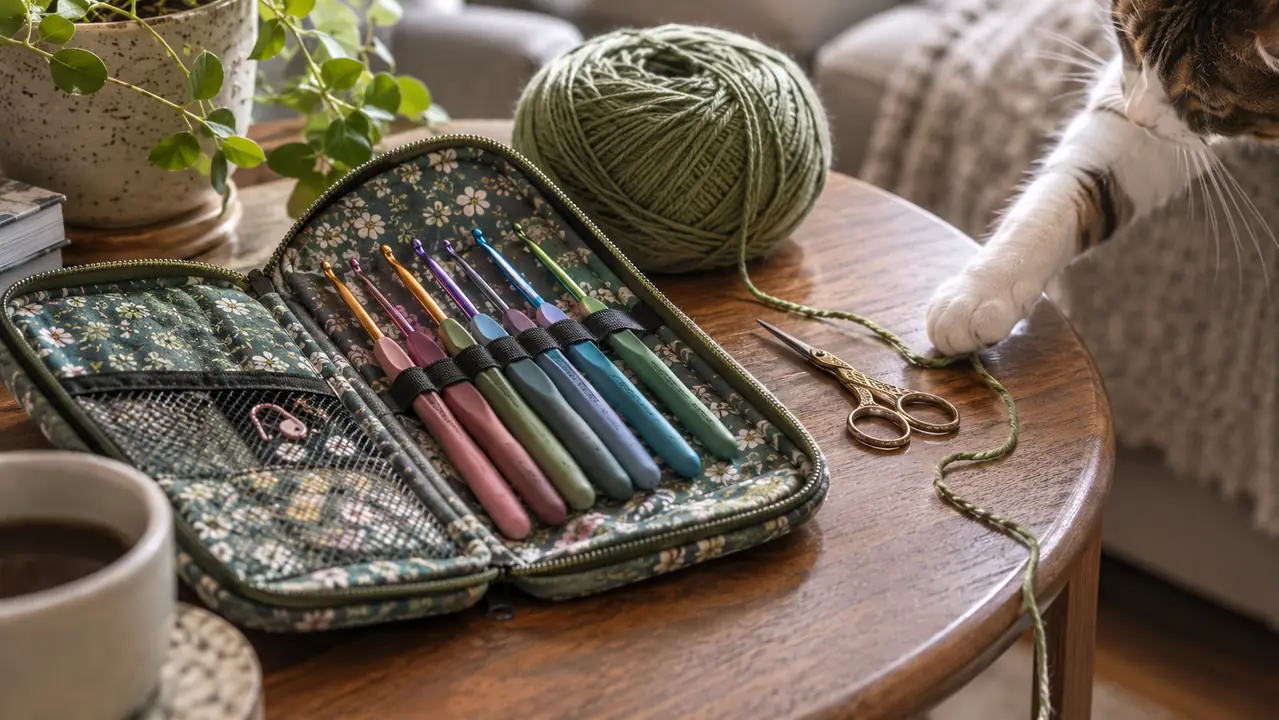
The range of sizes changed how I work. I mostly grab the ergonomic hooks for blankets and hats, but I also do lace edging on baby blankets, and those 10 lace hooks from 0.5mm to 2.75mm are the only ones small enough for fine thread. Before, I owned maybe four hooks and made do. Now I match the hook to the yarn the way my grandmother always told me to, and my gauge is more consistent than it has been in years.
Now the honest part, because every tool has one. The thicker handles took a couple of evenings to get used to; my grip had trained itself around skinny metal for decades. The 0.5mm hook is genuinely fiddly, and I reach for it maybe twice a year. And the elastic bands in the case are snug at first, so you have to ease the hooks in until the bands stretch a little. None of that changed my verdict. The whole set weighs 0.46 kg, light enough to carry to the yarn circle, and the 90-day manufacturer warranty has never needed to come into play.
Six months in, the hooks look the same as the day they arrived. The printed size markings are still easy to read, the silicone handles have not worn, and the case still closes tight. I have made four baby blankets, a stack of dishcloths, and about twenty hats for the hospital charity drive with this set. My thumb still aches some evenings, because arthritis does not disappear just because you bought a nicer hook. But it aches far less, and it stops aching sooner.
What I'd Tell You If We Were Sitting at My Kitchen Table
If you are reading this because your hands ache when you crochet, here is what I would say over coffee. You do not need to replace every hook you own tomorrow. You need one hook with a comfortable handle in the size you use most, to see if it helps. What sold me on the Yarniss set was that it covered every size I would ever need in one case, so I was not buying a single hook, falling in love with it, and then hunting for matching ones in the other nineteen sizes. The color coding and printed sizes sound like marketing until you are mid-project and need a different size without putting down your work. And give your hands a week. The first evening feels different, not necessarily better. By the third or fourth project, the difference is plain.
Your evenings are worth it
If your thumb complains by the third row, an ergonomic handle is the cheapest fix I found. The Yarniss 20-size set has held up through six months of daily crocheting in my house, and Pickles has not stolen a single hook.
Amazon Check Today's Price on Amazon →